Carbon

A simple place to write, with images — and a Listen button on every post, so anyone can hear it read aloud.

All blogs

Companies

Company profiles: what they do, what they charge, and how the business works.

Write a post

Posts

Companies

GE Vernova fell 7.5% in a day. The AI infrastructure selloff, explained

Nov 22, 2026

GE Vernova (GEV) fell 7.5% on Friday, November 20, closing at $699.33, on a day the S&P 500 fell 3.7%. The stock is down about 24% over the past month and roughly 40% from its July high near $1,196 — though it is still up about 7% for the year. The cause is not that electricity demand fell. It is a selloff across AI infrastructure, and it is about expectations, not about power going unwanted. What an AI infrastructure selloff is AI infrastructure is the physical backbone of AI: data centers, power turbines, chips, networking gear, cooling, and construction. A selloff means investors are selling those stocks all at once, so their prices fall together. Stock prices reflect expectations about future profits and timing, not current demand. These stocks had run up enormously on the bet that data-center spending would keep exploding. When a few doubts hit at once, investors started asking whether the buildout would be slower and more expensive than priced in — and took profits. The SoftBank writedown The trigger that hit power stocks hardest was SoftBank. It did not write a $3.7 billion check — it took a $3.7 billion writedown, admitting money already paid is gone. Gas turbines and transformers take years to build, so a SoftBank subsidiary had been paying billions in advance to reserve manufacturing slots before project plans were even final. By September it had paid out about $9.5 billion in advance payments, and reserved over 13 gigawatts of turbines for an Ohio data-center campus that only needed 9.2 gigawatts. Then the project specifications changed, SoftBank cancelled the surplus orders, and those advance payments were non-refundable. About $2.85 billion of deposits was lost outright, plus roughly $880 million in contract cancellation costs. That helped push SoftBank to a roughly $7 billion quarterly loss, its first in nearly two years. SoftBank says the Ohio project itself is not cancelled, just being reassessed, and it may get up to $2.1 billion back in rebates on future purchases. But the market read it as a warning: the most aggressive buyer in the AI power race over-ordered and is now pulling back. Why demand estimates are coming down It is not that people think data centers will not be needed. The doubt is about how big and how fast the future buildout will be. The forecasts got cut hard. Research firm SemiAnalysis slashed its 2030 AI accelerator spending forecast from $1.53 trillion to $923 billion — a $608 billion cut, with 2029 and 2030 both down about 40%. One widely cited estimate had data-center spending at $7 trillion through 2030; now people talk about $3–4 trillion. The money coming in does not cover the money going out. AI labs earn roughly $150 billion a year against nearly $1 trillion in annual hyperscaler spending. One research estimate puts $8.5 trillion as needed to earn the expected return, against a revenue forecast of only $3.6 trillion — putting over $3.5 trillion of spending at risk of write-downs. Power is the bottleneck, not demand. US data-center demand is estimated at 75 gigawatts by 2030 against only 58 gigawatts of committed supply, and transformer lead times run over three years. Microsoft has said part of its $80 billion Azure order backlog cannot be delivered because of power shortages. Politics turned. In the November midterm elections, data centers became a campaign issue — 27 restrictive local ballot measures passed and all 13 pro-development ones failed. Financing is getting shaky. The smaller AI-cloud companies borrowed heavily to buy graphics processors, and the infrastructure owners get only a thin slice of AI revenue while carrying the debt. One estimate expects over 80% of these smaller cloud providers to lose their independence by 2030. The other side of the story None of this means demand has disappeared. Current computing capacity is sold out: one large AI cloud provider reports being sold out through 2027, graphics-processor rental prices are rising, and another provider runs its processors at about 98% usage. GE Vernova's own business is still strong. Third-quarter earnings in late October beat expectations at $4.81 a share on $12.6 billion of revenue, with $29.3 billion of orders in the quarter and a backlog reported near $197 billion. So the selloff is the market repricing the speed of the buildout, not the existence of demand. The power is genuinely needed, and the orders are real — but the stock had priced in a faster, smoother boom than the market now expects. Sources MarketWatch — GE Vernova stock falls Friday, underperforms market https://www.marketwatch.com/data-news/ge-vernova-inc-stock-falls-friday-underperforms-market-456d3513-7ca73be4152d Bisnow — Data center equipment write-down drives SoftBank to rare quarterly loss https://www.bisnow.com/news/national/data-center-capital-markets/softbank-takes-3-7b-hit-on-data-center-equipment-it-no-longer-wants HTX Insights — AI infrastructure investment cools down, SemiAnalysis cuts five-year compute forecast https://www.htx.co.si/news/ai-infrastructure-cools-down-nvidia-takes-the-hardest-hit-se-Ea1soq3B0 Die Signal — AI data center spending slows as compute stays tight https://diesignal.com/articles/ai-data-center-spending-shrinks-as-compute-stays-sold-out Futubull — US data center construction hits the brakes https://q.futunn.com/en/feed/117624827216276

Companies

Nine companies from the final FYSK showcase: the next milestone for each

Nov 21, 2026

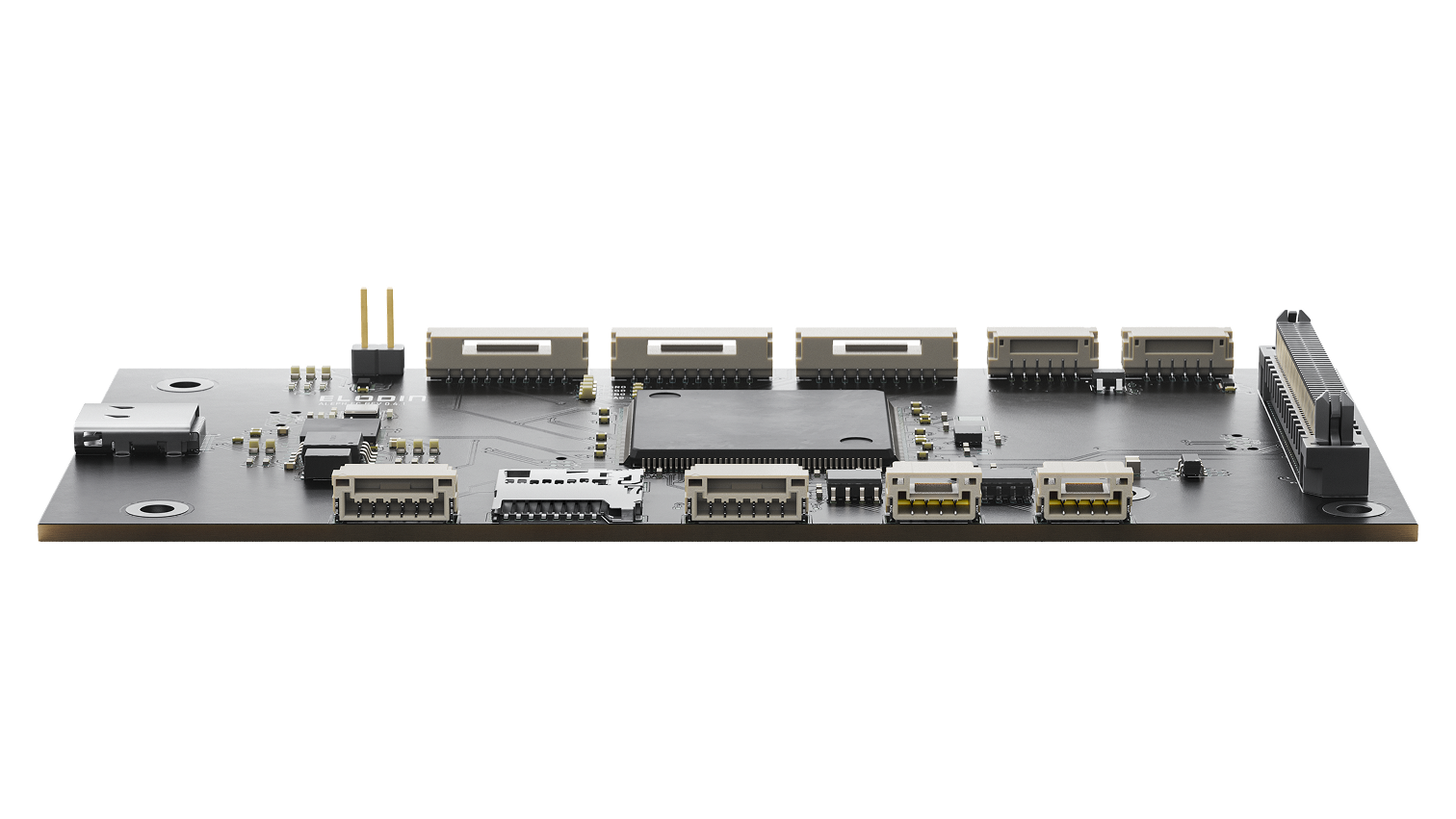
Nine companies took the stage at the final Founders You Should Know showcase of 2026. Each one is building in a different corner of the new economy — ocean power, robot data, Mac clouds, ground stations. Here is what each does, and the next milestone to watch. Panthalassa — floating AI data centers, powered by ocean waves https://panthalassa.com/ Its Ocean-3 platform is a self-propelled floating node that turns wave motion into electricity, cools with seawater, and beams the results back by satellite. A $140 million Series B in May 2026 paid for a pilot manufacturing facility in Vancouver, Washington, which opened in November. Next milestone: test Ocean-3 in the northern Pacific before the year ends, with commercial deployment targeted for 2027. Hone — enterprise AI that owns outcomes, not tasks https://hone.com/ Its Engines are persistent AI systems assigned to a business goal — improve retention, say — that onboard themselves, learn the company's systems, and keep working until the goal is met. A $60 million seed round in October 2026, at a $285 million valuation, launched the product. Next milestone: putting Engines into production with enterprise customers and proving the model works beyond software engineering, where AI returns have so far been strongest. That is the company's stated direction; no date has been given. Diode Computers — circuit boards as software https://www.diode.computer/ Engineers describe a board in code, a compiler turns it into a manufacturable layout, and the company ships working boards. A $11.4 million Series A in July 2025, and a partnership with Anthropic announced in December 2025 to make Claude a better electrical engineer. Next milestone: turning that partnership into an AI electrical engineer that produces boards that ship on the first try, and growing the customer base among robotics and defense hardware teams. That is the company's stated direction; no date has been given. XDOF — the data layer for physical AI https://www.xdof.ai/ It collects real-world teleoperation data — humans operating robots remotely — and builds the pipelines, tools, and annotation systems that robot labs need to train general-purpose robots. A $70 million Series A in June 2026, plus the release of ABC-130K, the largest open-source bimanual robot manipulation dataset. Next milestone: a Series B reported in September to be in late-stage talks at about a $1.2 billion valuation. The terms are not final — treat it as reported, not closed. Bindwell — AI-designed pesticides https://bindwell.ai/ It uses drug-discovery AI techniques to design new pesticide molecules from scratch, targeting only the pest, and licenses the molecules to agrochemical companies instead of selling them software. A $6 million seed round in November 2025, and lab testing of its AI-generated molecules is under way. Next milestone: its first proprietary pesticide through validation and a first licensing deal. That is what the seed funding was raised to do; no date has been given. Trajectory — AI models that keep learning on the job https://www.trajectory.ai/ Its platform lets companies post-train open-source models from production feedback — a lawyer's edit to an AI-drafted memo becomes a training signal — so models improve at specialized work without a standing machine-learning team. A $45 million Series A at a $300 million valuation in November 2026, the same week the platform opened to the public. Next milestone: converting the public launch into broad self-serve adoption beyond its first named customers in legal, finance, and customer service. Long Lake — an AI holding company https://llmh.com/ Instead of selling software, it buys services businesses — 35 so far, across property management, architecture, HR, and more — and deploys its AI platform inside them. A $2.25 billion Series D in May 2026 valued it at $12.44 billion. Next milestone: completing its announced $6.3 billion take-private of American Express Global Business Travel, the world's largest corporate travel platform — the biggest test yet of the buy-and-operate model. Mount Thor — Mac data centers for AI agents https://www.mountthor.com/ It runs macOS on Apple silicon as elastic cloud instances, so agents can work in the environment where people actually use computers. Founded in 2026, it deployed its first data center in under six months, then raised $45 million across seed and Series A in November 2026. Next milestone: scaling data-center capacity and hiring with the new funding — more Mac capacity for agent training and deployment. Northwood — the shared ground network for satellites https://www.northwoodspace.io/ It designs and builds its own antennas and sells shared ground-station capacity to satellite operators, instead of each operator building its own dishes. A $375 million Series C in November 2026 at a $2 billion valuation, six multi-orbit sites deployed on two continents, and a new 185,000-square-foot factory in Torrance that opened in September. Next milestone: site and network expansions to be announced in the first half of 2027, plus 400 new hires over three years. Nine companies, nine different bets — and the next six months will tell which milestones land.

Companies

MandapCanvas: see your Desi wedding before it happens

Nov 20, 2026

MandapCanvas (mandapcanvas.com, by OneCreator LLC) is an AI preview tool for Desi weddings in the US. The pitch is simple: see the wedding before it happens — your looks, your mandap, every event — before booking anything. Two products, both pay-once, no subscription for couples. 1. Bridal looks. Upload a few selfies and get photo-real portraits of yourself as bride, groom, or couple at every event. 12 portraits for $4.99, 30 for $9.99. One look free first, no watermark, private album, a few free redos. There are themed sets too: twelve heritage silk sarees from Banarasi to Kanjeevaram, and a nine-day Navratri set, one saree in each day's color. 2. Mandap designs. Sketch it on screen, upload a photo, or pick one of 12 styles, and get photo-real decor previews event by event — Haldi, Mehndi, Sangeet, Reception — with the couple in the images. Two previews free. Starter is 30 images for $9.99 (up to 2 events), Signature 60 for $19.99 (all events, PDF lookbook, family voting on favorites), Grand 100 for $29.99 (family color coordination, HD downloads, priority generation). Extra images are $2.99 per 10. Around the paid products sits a free-tools funnel: a venue decor visualizer, an art portrait tool (anime, 80s retro, Tanjore), an invitation maker with 13 styles, a palette extractor from an outfit photo, a palette finder by event and season, an outfit color matcher, and a hashtag generator. All free, no card needed to try. The other side of the business is decorators. MandapCanvas Pro is $29 a month for 150 images and branded proposals — sketch with the couple, show a photo-real mandap, send the proposal. The pitch is closing the booking in the first meeting. Coverage is broad: North and South Indian, Gujarati, Bengali, Marathi, Sikh (Anand Karaj), Muslim (Nikah and Walima), Desi Christian, and fusion or interfaith weddings, with event names and outfits matched to each tradition. Two honest notes, both from the company's own pages. First, the images are AI concept previews, labeled as such — a designer's rendering for choosing colors and briefing a decorator, not a promise of what the real flowers and fabrics will look like. Second, privacy: photos are deleted in 7 days, and payments go through Stripe, with a 14-day fix-or-refund window. The business model is the interesting part: one-time payments from couples, a monthly seat from decorators, and free tools doing the marketing. No subscriptions for the people getting married; the recurring revenue comes from the professionals. Source: mandapcanvas.com and mandapcanvas.com/pricing, read Nov 20, 2026.