The Ledger
Why does a transformer take three years to build?
Nov 26, 2026
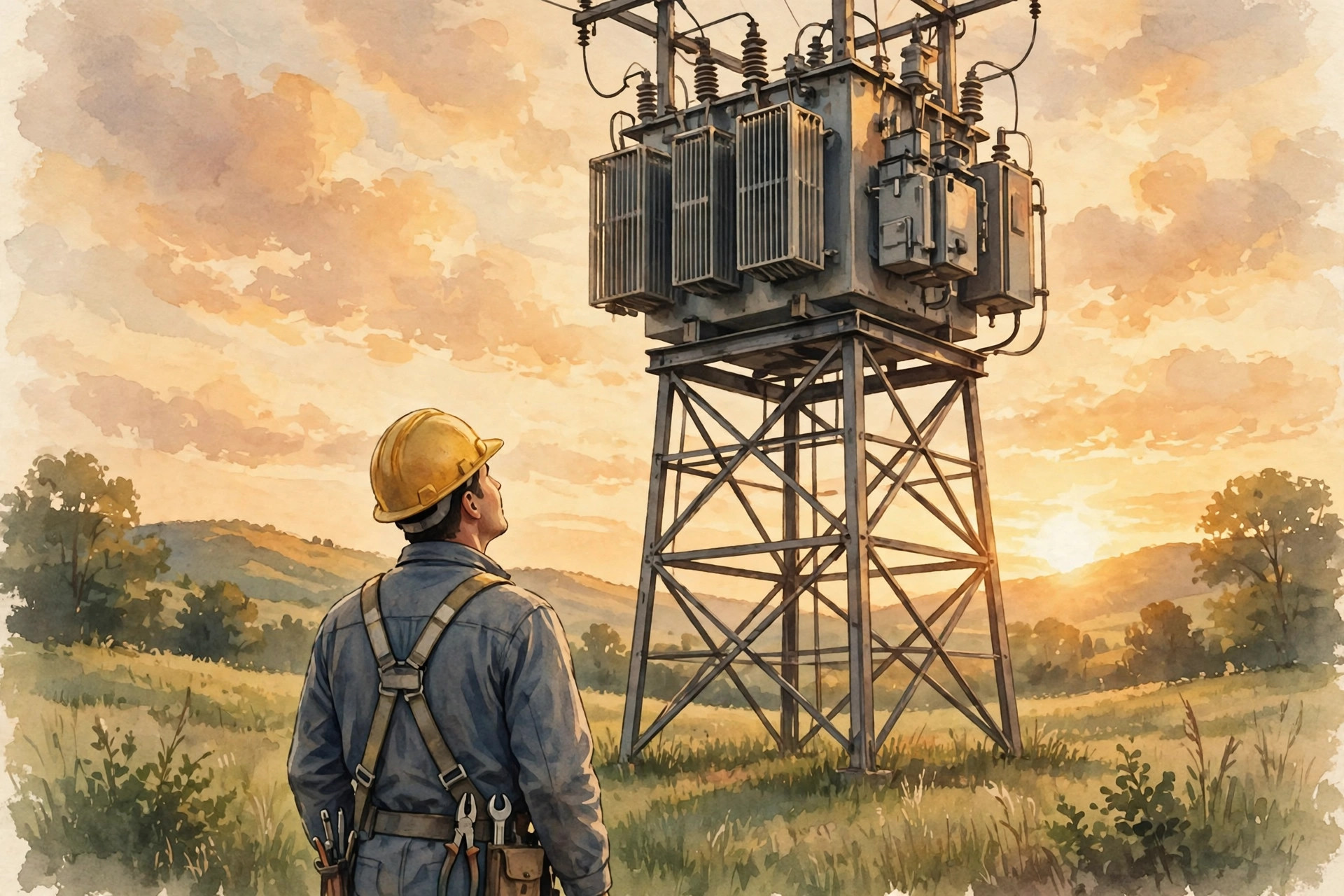
The strangest bottleneck in the AI build-out is not a chip. It is a metal box the size of a two-story house, weighing as much as a fully loaded 747, built on a design invented in the 19th century. A large power transformer. Demand for the kind that connects power plants to the grid nearly tripled between 2019 and 2025. Costs rose 80% over the same period. An order placed today can take more than three years to fill and deliver. And there are no spares waiting in a warehouse.
Why? The first answer is the steel. A transformer core is made of grain-oriented electrical steel, and the name describes the trick: precise thermal and mechanical processing aligns the steel's magnetic crystals in a single direction, so magnetic fields pass through with very low energy loss. That alignment is what lets a transformer handle huge amounts of electricity without wasting it as heat. Only about ten mills in the world have the technology to make it. One of them is in the US. Everything else about the grid's expansion — every new data center, every new wind farm, every new gas plant — waits on a material made in a handful of factories.
The second answer is copper. The steel core is wrapped in copper wire, and copper is in short supply too. The US put a 50% tariff on semi-finished copper in August 2025, which raised the price of the input every transformer needs. China refines about 47% of the world's copper. The transformer shortage is two shortages stacked: the steel and the wire.
The third answer is that every one is custom. A large transformer is designed for its location — its voltage, its load, its site. It is not a product with inventory. If a specialized transformer fails during a storm or a heat wave, there is not a replacement sitting somewhere. The utility waits, like everyone else, for years.
The fourth answer is the demand shock. Data-center grid demand stood at about 62 gigawatts in 2025 and is projected to reach about 134 gigawatts by 2030. One estimate puts 2030 demand at 75 gigawatts against 58 gigawatts of committed supply — a 17-gigawatt shortfall before a single new campus is counted. Transformer lead times of 128 to 144 weeks mean power constraints are now extending construction timelines by 24 to 72 months. The bottleneck migrated: first it was chips, then packaging, now electricity. Each layer deeper into physical infrastructure, each one slower to fix than the last.
And the workarounds have their own bottlenecks. Data-center operators, tired of waiting for the grid, are building their own power on site: at least 74 behind-the-meter gas plants are planned in the US, about 143 gigawatts combined. But gas turbines are sold out too — the backlog reached about 116 gigawatts at mid-2026, and a heavy-duty turbine ordered today does not arrive until 2031. Turbine blades are made from specialized metal combinations coated with ceramic heat shields, because they burn hotter than standard steel can survive. Scarcity does not disappear when you route around it. It moves.
What does this mean for the next three years? It means the supply side of the energy story is decided in steel mills and copper refineries, not in software roadmaps. A grid-software product can unlock capacity on the lines that exist, and that is real value — one estimate says the grid could absorb 76 gigawatts of new load if that load accepted tiny amounts of curtailment. But software cannot conjure a transformer. The number to watch is not a forecast. It is whether anyone builds a new electrical-steel mill, and how many years that takes. Until then, the most advanced technology in the world waits on a 19th-century machine that takes three years to build.
Sources: the materials choke points; the power gap; the transformer shortage.
https://electronsx.com/materials-autonomy-overview.html
https://prometheus.org/2026/11/18/the-grid-will-fall-short-of-ais-power-needs-these-6-resources-can-close-the-gap/
https://datanews.online/article/us-data-center-expansion-faces-power-gap-and-aeaee34b
— Priya